Caretakers
We are called by God to be caretakers of this world, and sometimes, it's an exceptionally difficult task.

And God blessed them, and God said unto them, Be fruitful, and multiply, and replenish the earth, and subdue it: and have dominion over the fish of the sea, and over the fowl of the air, and over every living thing that moveth upon the earth. - Genesis 1:28
Early in college, when my faith started wavering, I had an environmental studies professor who took our class into the campus chapel, and as we were appreciating the stain glass windows, reminded us of this verse. (In my mind there was an actual window that pertained to this verse, though I can't say for certain.) This verse, and the discussion thereafter, kind of solidified my falling away from religion. I was – and still am – an environmentalist of sorts – though my definition of what an environmentalist is has matured. I took great offense at this idea that we humans should “subdue” the earth and take “dominion” over “every living thing that moveth upon the earth.” And, to be fair, taken alone, this verse can sound rather damning for the natural world, just look at how well it has faired under the thumb of humans from the industrial farming industry, to the battery mines of the clean energy industry to the biggest polluter of all: the military industrial complex. For a while, I stopped hunting and fishing. Instead of walking through the woods with my Marlin 22, I'd walk through the woods with my Minolta. I continued gardening at my parent's home, and even tried to go vegetarian. Eventually, I gave it all up and became apathetic to nearly everything, politics, finding full-time work, religion, and a list of other things.
I'm still not an avid hunter, I try, but my personality doesn't lend itself to sitting in the woods for hours on end. My brain rushes to all the different tasks I should be doing – spending time with the kids, helping my wife, putting up fence, trimming hooves, readying stalls, fixing barns, the list is endless. Instead I've taken to a much more pastoral sort of life, though without all the downtime the shepherds of yore had, while they wrote Psalms as they watched their sheep. It always strikes me funny when someone will ask how our “farm” is, or mention our “farm” in conversation. To me it is much less than a farm and more a smattering of animals that provide some sort of by-product for our family's consumption. We have egg laying chickens, and we do batches of meat birds three or four times a year. There is a breeding flock of Blue Slate turkeys that give us something to put in the freezer. We also have three of the most expensive lawn ornaments known to man that my wife and daughters enjoy. And lastly, we have goats.
For the most part, the animals we keep provide us with something: namely eggs, milk and meat, though I will admit the horses provide a strange companionship to the women of my house. Generally speaking, our meat comes from the yearly turkey hatch and meat birds we grow out and process. Processing day is always a chore of sorts: readying the cooler, laying out the processing table, sharpening knifes, hanging the killing cone, waking up early to beat the heat and flies, and that's just for set up. We're not a large scale operation, but we haven't bought chicken in four or five years. Despite the number of birds we've processed the fact remains: processing hasn't gotten any easier. Sure we've fallen into a rhythm, we know who does the eviscerating and who's in charge of making sure the water for plucking is up to temperature. We know which kids can help and how many birds we can do in an hour, but the actual dispatching of the bird is still the least favorable task. When we lived in Vermont, we raised American Blue Rabbits for meat. Typically I would process at night, and I would spend the entire day trying to steel my nerves in preparation for that evenings task.
Generally speaking, 8-week old white chickens all the look the same, and it was true of the rabbits, too. This homogeneity makes the task a little easier when you're in the middle of a batch of animals – there's no remembering which rabbit ate a carrot out of your hand, or the chicken that always perched on the top of the feeder to eat, they're all the same – but the first and the last are always the toughest: deciding which animal would be the first to start the process and which would be the last, waiting all alone in a pen to meet it's demise. It's not a process I relish, but it is a process that is necessary and one that hasn't ended with rabbits and poultry.
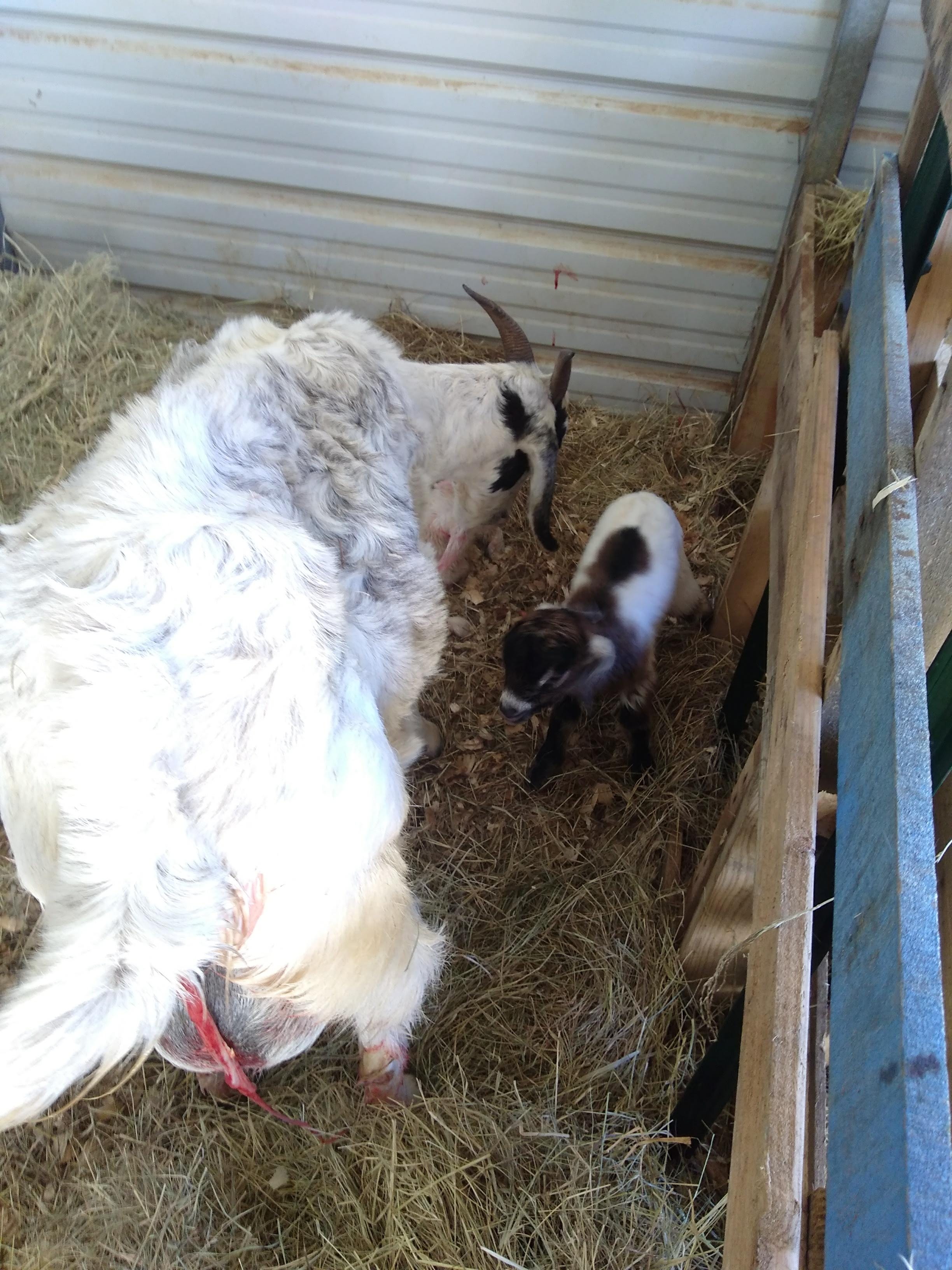
We raise goats. Mostly for their milk. Unfortunately, in order to get an animal into milk, it needs to be bred, and that means babies. And what to do with the babies? There's really only three choices, keep them, sell them, eat them. Keeping them is great if you only have a few and are trying to grow your herd, but consider that statistically, only half of your kids will be females, the other half will be unmilkable males, and if you've ever been around billy goats, they're not that pleasant. Billys are cute when they're little – and I've found our billys to be more personable than our does when their kids – but once they start to mature and start urinating on themselves, all bets are off. What was once a cute little goat you could pet and love on, turns into a putrid, rapey monster, and that's not fun. We've toyed with the idea of selling some of our excess animals, but we haven't forded that river yet. Perhaps it's the animal loving yankee in me, but I don't trust many southern buyers at an auction. I want my animals, God's creations, to be treated with respect and raised kindly with love, and there's a good chance that won't happen. So that brings us to our third and hardest option: eat them.
Meat animals are the reality to any animal husbandry operation and no matter your intentions, it becomes a necessity. Even if you're selling all your male animals, there's a very high percentage that those buying your bucks at auction are probably buying them for their dinner table. In our minds, why act like a mini-industrial producer? Why stress an animal, separating it from it's herd, caging it, taking it to auction and sending it home with a stranger only to be slaughtered and butchered at their house? Why not just do that at our house?
This past weekend, this was what we did. It's been something we've talked about since we entertained the idea of goat husbandry, and one that had been creeping closer daily. About two years ago, our second doe to give birth gave us a set of twins – unlike rabbits or chickens – you can sex goats right away and we saw that we had a buckling and a doeling. The notion that at least one of these goats would end up going to freezer camp became a reality that left a sort of melancholy cloud looming over the buckling for his life. We wethered him when he was little, and let him grow, he played and frolicked as all ungulate kids do. He seemed like he enjoyed his goat-life, and we enjoyed watching him grow. But, as we had more goat-kids, we started to realize that our herd was getting a bit too big, and his time had come. Of course, we realized this last spring. It was something, to my wife's displeasure, I kept putting off. I needed to do some research as to the best way to dispatch the goat, and I needed to figure out where to hang him, how to process him, how to break down the cuts, is it different than venison?, can I make steaks?, but in truth, it was nothing that took more than fifteen minutes to figure out. It was just my way of procrastinating an unwanted task. I procrastinated long enough that the summer rolled in and there is no sense processing animals in the Georgian summer with the bugs and the heat, so it became a waiting game. Finally fall and winter crept in and the weather cooled, but of course there were more pressing matters – bucking and splitting firewood, kids sports, etc, and slowly as the weather warmed, crunch time came. There was no more room for procrastination. I wouldn't have minded waiting, but pasture space was growing small as we added more does earlier this kidding season; feed costs kept climbing, and we were just becoming spread too thin trying to care for all the animals.
Despite knowing that this animal was intended to provide meat from it's birth, that from the very beginning of time, God intended this animal to provide sustenance to man and I just happened to be the man in this instance, it was still difficult. Tensions ran high as we prepared the area where his carcass would hang and filled the feed buckets, one of which we would use to lead him out of the pasture for the last time. There was a certain sense of urgency as we walked to the pasture's edge and dropped feed buckets for the does, slipped a lead around his neck and led him out of the pasture to an area secluded from the other animals. My son opening and shutting the electric fence couldn't get it done fast enough. My wife couldn't lead him with the feed bucket to the killing area fast enough. In truth, it wasn't that they couldn't, it was just my panicked stress coming out in verbal form. My wife dropped the feed bucket and backed up. He buried his face in the feed and I took aim with my Marlin 22. A deep sigh of regret. A single finger twitch. He dropped. There was no convulsing, no bleating of pain or fear. It was over. My biggest worry, that I would somehow maim this handsome gift from Heaven and cause it to suffer unduly, thrashing around on the ground terrified and in pain, had not been realized. My panic and fear were gone. I thanked God for his guidance and moved on with the process.
God calls us to subdue the earth and have dominion over all the living things as my professor pointed out, but the part my professor left out – knowingly or not – is one of the most important parts. Consider Genesis 2:15: “The Lord God took the man and put him in the garden of Eden to work it and keep it.” The thing is, God left us not as dictatorial rulers over nature, but keepers of nature. This is His creation and while humans have rule over it, we are to be keepers of it: wise and kindly stewards. We are called to take care of the earth, to recognize that while we are given rule over it, we must still treat it and it's inhabitants with respect. We will continue to rebuild pasture in an attempt to rehab the land that saw a century of industrial farming and overgrazing. We will continue to collect a bounty of food and give thanks for our provisions as we care for what has been bestowed upon us.